Lamar CISD Police Chief Terminated Amid Investigation, Raising Transparency Concerns Under Texas Public Information Law
ROSENBERG, Texas – The sudden termination of top leadership within the Lamar Consolidated Independent School District police department is drawing heightened scrutiny—not only for the underlying allegations, but for the district’s handling of public information requests.
Former Police Chief Henry Garcia and a department lieutenant were dismissed on the same day last week, leaving the district without a police chief. Garcia, who had led the department since 2023, previously served with Maria Molina at the Stafford Police Department for approximately seven years before recruiting her to Lamar CISD, where she was promoted to
lieutenant in August 2025.
The terminations stem from an internal investigation first reported in February by KTRK ABC13. At the time, the district confirmed that two officers had been placed on administrative leave but declined to identify them or provide further details.
As media outlets pursued additional information, Lamar CISD resisted disclosure, filing arguments with the Texas Attorney General asserting that the requested records were protected by “common law privacy.” The district claimed the matter may involve “highly intimate or embarrassing facts” that are not of legitimate public concern.
For attorneys practicing in the areas of Freedom of Information law and media law, the district’s position raises significant legal and constitutional questions regarding transparency, accountability, and the proper scope of public-records exemptions.
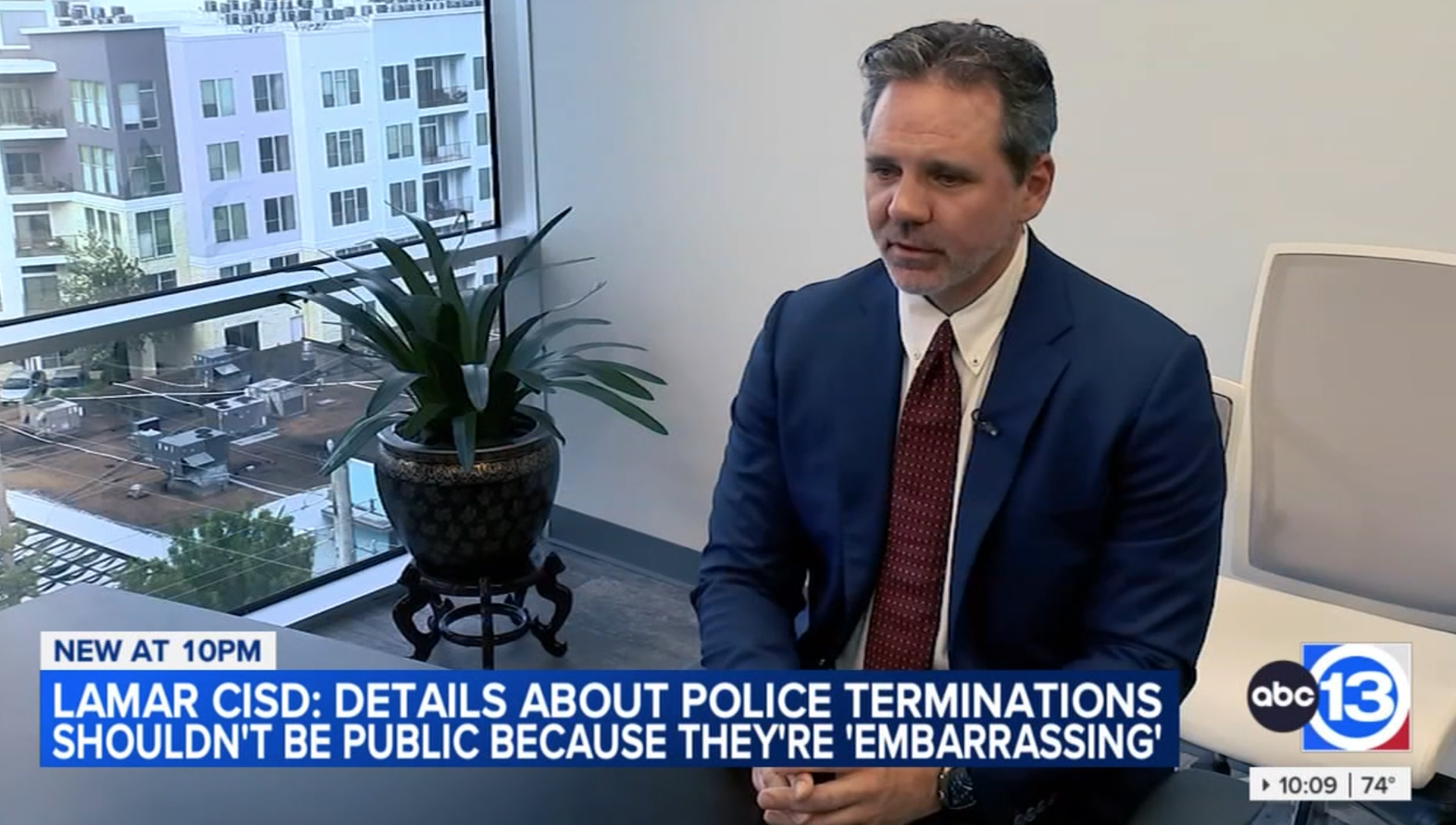
Gregor Wynne Arney attorney Thomas Gregor, a board member for the Freedom of Information Foundation Texas, says that argument raises questions.
Gregor, a recognized advocate for government transparency and issues frequently handled by a Freedom of Information lawyer addressed the district’s stance:
“The fact that they have raised all of these on an issue that obviously has public importance tends to suggest something is happening. They are just not willing to disclose it,” Gregor said.
He further emphasized the foundational principle that public officials operating on public property are subject to public oversight:
“If you don't know what your government is doing, how can you hold them
accountable?” he said.
According to attorneys representing Garcia and Molina, both terminations were based on allegations of “conduct unbecoming an officer.” Sources indicate that the alleged incident occurred on school district property and that video evidence may exist.
Both officers are actively challenging their dismissals. Their legal teams assert that Lamar CISD failed to follow required investigative procedures and governance protocols.
Molina’s attorney, Matthew Banister, has publicly disputed the district’s conclusions, stating the decision is “not substantiated by the facts” and confirming that his client intends to “vigorously defend her reputation.”
Despite the significance of the leadership changes, the district – serving nearly 50,000 students and recognized as one of the fastest-growing in Texas—did not notify parents until days after the terminations, and only following repeated media inquiries.
Gregor underscored the importance of timely disclosure to the public, particularly in a school district context:
“They work for the public. They work for the district. They work for the parents. They work for the students, and they should be entitled to know what those people are doing and whether they are employed or not unemployed.”
Both Garcia and Molina have filed formal grievances contesting their terminations.
Click here to watch entire story on ABC13